 |
||
| . . . Chronicles . . . Topics . . . Repress . . . RSS . . . Loglist . . . | ||
|
|

|
|
|||||
| . . . 2026-09-15 | ||||||

Any good collection of Bacon-bite-sized essays should trigger underlines, marginal question marks, and furious annotation.
David Collard's A Crumpled Swan is a very good collection.
Near the end of Collard's bitty essay "On euphony and cacophony," describing word-specific revulsion, he cites Mark Liberman, and adds:
His paper focuses on ‘moist.’ What are your thoughts on that? I’m trying to think of its use in a poem and come up with nothing at all.
And as I read this, a prominent poetic "moist" sprang (or plopped) to mind.
I love most Velvets songs and many Lou Reed songs, but there's only one Lou Reed lyric I enjoy as a lyric poem, the same way I can enjoy detached Campion or Hart lyrics. That one Lou Reed lyric is "Some Kinda Love" and this is the beginning of the fourth verse:
On the phonic side, Reed — it's an effort not to type "Lou", remembering his sneer at John Rockwell's "Mr. Reed" — Reed sets the shot up nicely: "most" strikes "coil", "still" strikes "eyes", "moist" in the corner pocket. Any personal repugnance is entirely to the point, and should the sprechstimmer wish to drive that point home, spondees support spitting the last word out: "But which still | makes your eyes | moist."
On the connotative side, Reed's association of "moist" with some kinda love that dares not speak its name (which at many times and places has meant any kinda sexual response whatsoever) was no novelty. You don't have to read much Elizabethan or Jacobean literature before noticing an "if moist palms, then lascivious heart" rule of thumb.
It's not difficult to understand how the syllogism evolved from metonymy.
Neither, keeping that in mind, is it difficult to understand how bitter enemies Jane Austen and Mark Twain found common dry ground on moist-avoidance. Although Twain may have enjoyed cussin', he never exhibited much interest in fuckin', suckin', or lickin'.
Perhaps this supposed literary aversion is less a matter of inherent cacophony than a matter of which topics were most canon-friendly (which is to say, "suitable for classrooms")? One might, for example, expect a higher hit rate in erotica.
As expected, I don't have to flip many pages of filth to find abundant moisture and moistness. Restricting myself to books with respectable covers, I immediately think of Edmund Wilson's regrettably unforgettable simile, "firm little insteps [...] like two moist little cream cheeses encased in covers of cloth." (Cf. Chaucer: "Hir hosen weren of fyn scarlet reed ful streite yteyd, and shoes ful moyste and newe.") And as we've learned from journalism's Bad Sex awards, adolescent cries of "Oh, gross!", and vehement assertions that doing something doesn't require noticing it, varying levels of fastidiousness can be expected in this marshy territory, with or without our supposed trigger word.
Of course, sex isn't the only appetite whose satisfaction forces us to confront mucus membranes. (By the way, if you think "moist" has a poor literary reputation, try "mucus".) I would, for example, posit frequent usage in cookbooks. As "Fritz" commented at a different Language Log post, "it is the only word to use to describe how a good cake should be". Even eminent Victorian Mrs. Beeton repeatedly recommended "moist sugar" and freely admitted that "food as we get it is always moist." And even aside from sausage-making, I've met non-anorexics who profess to feel a little disgust at the thought of food preparation, and prefer the pretense that their edibles have been fabricated and packaged untouched by human hands.
The term is indispensable to gardening, as well. The first two uses of "moist" known to the OED, both from Wycliffe's 1382 Bible, refer to arable land and lush vegetation. And anyone who's clutched a heavy, moist, redolent bag of Walt Whitman Compost to his or her manly breast must have felt at least a little dirty afterwards.
Turning our firm little steps back to phonological poetics, we find that "Some Kinda Love"'s echolaliac wrapping, like its saucy dubiety, is entirely characteristic of "moist" deployment.
Orally-transmitted poetry offers the darkly thrilling:
As might be expected, Christopher Marlowe indulges. From "Hero & Leander":
And where "Hero & Leander" go, can "Venus & Adonis" be far behind?
Lesser Caroline poet John Hall patterns nicely in "Julia Weeping":
Greater Carolinecidal poet John Milton unusually associates (and chimes) "moist" with chaste fecundity. From Comus:
And from Paradise Lost:
Keats had personal associations of his own:
Shelley, however, stays in the moist mainstreams:
Our earlier mentioned bag of compost naturally yawps it:
In their marriage of overripeness and desiccation, ‘Michael Field’ proffers an emblem for the entire fin de siècle:
Petard-hoistedly enough, a final example was approvingly transcribed by David Collard himself a few years ago:
I conclude, none too soon, that "moist" isn't an anti-poetic word so much as an anti-unmarked anti-lulling word. It doesn't sustain an easy groove and mood; it attracts attention from the reader and requires attention by the writer.
Is that just another way of admitting that it's cacophonous? Possibly, but really now, honey-and-treacle is not a balanced diet. What would tonal music do without a little dissonance (and vice-versa)? And how could lean unlovely English fit itself for a night out without a full wardrobe of diction switches, slap and tickle, clashes, drawls, hisses, thuds, and croons?

We have unintentionally done harm to our dear old Golden Age compatriot, bhikku:
Oh Raimundo, compañero, this is very sad to find! I was exposed to that stomach-churning Edmund Wilson/feet passage as a callow youth, and spent years, decades, exorcising it from memory. The strict regimen of daily calisthenics, the days of rough fell-walking and cold-water swimming; reading could consist only of Spinoza and Aeschylus; music, solely the chamber works of Webern for small ensembles; food, very little but high in fibre and of course eschewing dairy; the immense cost in scourgings, retreats and regression therapy. And then one day it was gone: expunged: I was free. An hour's furious thought recalled not a syllable of it. Life could begin afresh: until now. Out of the blue, on an instant, like a hammer-blow of fate, your post has restored it and once more the horror is enthroned in my psyche like Satan in his Palace. The weary work must begin again . . . siempre tuyo, bhikku
As in the beginning, now, and ever shall be, we regret any inconvenience.
| . . . 2026-06-26 |
Notes from a closer-than-usual re-reading of l'Éducation sentimentale by Gustave Flaubert, in Robert Baldick's translation alongside the original text, with occasional reference to translations by Douglas Parmée and Raymond N. MacKenzie, followed by trawling secondary sources.
In Part II, Chapter 1, Frédéric Moreau returns to Paris and visits M. and Mme. Arnoux:
Madame Arnoux was wearing a dark-blue merino dressing-gown. Gazing into the fire, she had one hand on the little boy’s shoulder, and with the other she was undoing the laces of his vest; the child, in his shirt, was crying and scratching his head, like Monsieur Alexandre fils.
During Frédéric's previous Parisian residence, he'd heard Alexandre Dumas namedropped alongside "Shakespeare, Victor Hugo, and Dumersan," but so far as I know Dumas the Younger's table manners weren't Samuel-Johnson-level notorious.
More recently, while headed chez les Arnoux, Frédéric had been thoroughly ripped off by "the Alexandre tavern," where "the child of the house, an unspeakable brat of four, played with a rattle on the steps of the counter." But that child was neither crying nor scratching his head. So Alexandre fils, who he?
(Perhaps similarly mystified, in 2004 Geoffrey Wall corrected Baldick's translation and Flaubert's original by dropping the final clause of the sentence.)
Flaubert described the dive's heir apparent as "un intolérable mioche de quatre ans". Mioche isn't a Basic French sort of word, and as it happens its only other appearance in the novel is in the same Madonna-and-child scene I started from: "le mioche, en chemise, pleurait tout en se grattant la tête, comme M. Alexandre fils."
Which, to my mind, cinches the match.
With a great deal of luck, a re-reader might faintly recall this doubled-brat when they return to Madonna Arnoux's final appearance in Part I, before Frédéric Moreau leaves Paris:
He felt that he was in communication with her whole being through the child’s body which lay between them. He bent over the little girl, and, parting her pretty brown hair, kissed her gently on the forehead.‘You are a kind person!’ said Madame Arnoux.
‘Why?’
‘Because you are fond of children!’
‘Not all children!’
I took two lessons from this little interpretive venture:
1. Flaubert was unusually averse to any conceivably avoidable repetition.
Champions of free indirect discourse often maintain a pretense that POV-centric passages will report all novelistically important perceptions. Any gaps which are unexpectedly described retrospectively could indicate deliberate or subconscious repression by the POV character.
Whereas Flaubert is willing to backfill gaps so long as the supplement doesn't directly contradict earlier accounts. It's like the difference between a "fair play" puzzle mystery and Conan Doyle, who accepts as a matter of course that Dr. Watson's consciousness will miss the belatedly described perceptions of Sherlock Holmes.
2. Flaubert seems to have been one of those eccentrics who deploy individual words or phrases as load-bearing structural elements. Such obbligato grace notes add appreciably to the load borne by translators. Of my three samples, only MacKenzie uses the same English word for both appearances of mioche.
Pierre-Marc de Biasi (among many others) anticipated my sense of a structure schemed "down to the scale of word and occurrence." His chosen example was "baquet," which occurs first at a early peak of happiness and hope, last at a late peak of horror and despair, topped by whiteness in both.
Il était tombé de la neige; les toits étaient blancs;—et même il reconnut dans la cour un baquet à lessive, qui l'avait fait trébucher la veille au soir.— Part I, Chapter 6
Au bord du baquet, quelque chose de blanc était resté.— Part III, Chapter 1
Baquet has no single English equivalent. Depending on context, the translator might need bucket, tub, basin, trough, or even bucket seat. The first occurrence is explicitly a "wash tub". Determining the second ocurrence's context presents a new difficulty, one of genre.
Historical fiction, like science fiction, applies the resources of realism to a world other than that of our purportedly shared present-day-and-place reality. 1 A certain amount of disorientation is the point: past and future are foreign countries and we are visiting.
Some practitioners conduct guided tours, explaining our pseudo-surroundings while pointing out their exoticism. Others, including Flaubert, strive for a more thoroughly alienated drop-and-desert approach to tourism. A first-time no-external-aids reader of Ulysses (as I was) will find their greatest difficulty has nothing to do with Homeric allusions or dash-quotes, and everything to do with Joyce's uncompromising adherence to the historical fiction premise: what we get on the page is, as far as he can make it, an embedded native experience of 1904 Dublin. The ideal historical novel, like the ideal science fiction novel, would achieve complete opacity.
France in the 1840s is sufficiently documented to clarify most of l'Éducation's local color. Doing so, however, requires the relevant documents, and none of my three sample translators seem to have found them. Two ignore Flaubert's word and substitute one of their own; Parmée straightforwardly renders baquet as "the bucket," leaving us all in the same dark boat: which bucket would that be?
In 1958, Gilbert Guisan discovered Flaubert's source material, complete with le baquet, in a left-wing journal from 1849. As for how that definite-articled baquet might've looked, Guisan tells us it "was meant to let the prisoners quench their thirst," which suggests a single bucket to be shared by more than 900 men. Later, Biasi showed how it was transplanted into fiction over several drafts, and elaborated that "the famous 'baquet' was the communal basin in which prisoners were given water to drink like animals," 2 which might make "trough" the best match in English.
Much as I wish otherwise, I'm unable to recall every previous occurrence of each word while I read. But one intratextual memory intrudes over and over again: Arnoux's exasperated whisper in Book I, Chapter 5, "You're not very bright, are you?" («Vous n'êtes guère malin, vous!»).
Frédéric is not without his virtues. Depending on one's own moral compass, his doggy devotion to Madame Arnoux would count; it's his only truly distinctive virtù in the sense of "character strength." Then there's his impulsive generosity, and, let's see... good looks, I guess? Not especially cruel compared to his friends?
Above all else, though, he is reliably dense, an eternally darkest-before-the-dawn Marblehead. A trait which can be useful to the novel's other characters but infuriating to readers, including (in his muffled way) Henry James:
[...] if he imagined nothing better for his purpose than such a heroine and such a hero, both such limited reflectors and registers, we are forced to believe it to have been by a defect of his mind. [...] He takes Frédéric Moreau on the threshold of life and conducts him to the extreme of maturity without apparently suspecting for a moment either our wonder or our protest—“Why, why him?” Frédéric is positively too poor for his part, too scant for his charge.[...] Frédéric enjoys his position not only without the aid of a single “sympathetic” character of consequence, but even without the aid of one with whom we can directly communicate. Can we communicate with the central personage? or would we really if we could? A hundred times no.
— "Gustave Flaubert" (1902)
James may have been influenced as well as repelled. The Sacred Fount, "The Beast in the Jungle", The Ambassadors, and The Golden Bowl all center on the faulty intuitions of "limited reflectors and registers." Given the technique's apparent perversity, what makes it so attractive?
Well, there's the straw-into-gold attraction of repurposing a narrative obstruction as a narrative mainspring, making interpretation itself the source of suspense and relief.
Those who think it worthwhile to "try to be one of the people on whom nothing is lost" might also hope to provide a lesson in ethics. If Scrabble and crosswords exercise vocabulary retrieval, then free-but-not-yet-enlightened indirect discourse should exercise "the power to guess the unseen from the seen, to trace the implication of things, to judge the whole piece by the pattern."
James's participant-observer characters distinguish themselves from Flaubert's by their relative distinction, all apparently respectable enough to chat with, and their realizations of faulty vision at the climax of the tales, providing a readerly role model.
Whereas Frédéric remains callow, unskilled, and incurious about anything (other than Madame Arnoux) that doesn't directly impinge on his ego. Lacking any analytical impulse, Frédéric perceives (and the novel mostly presents) his storyline as a random walk through chance meetings and unexpected events to an insultingly unrevelatory anticlimax.
After Flaubert's death, researchers found that Flaubert had expended months of preliminary labor in scribbling more or less plausible explanations for every planned incident, only to erase all traces of them in the final draft. The self-undermining might not be quite as perverse as it sounds. I think D. A. Williams is right "that (for Flaubert) writing was predicated upon knowing, knowing in the abstract, knowing without saying." He wanted to convey a sense of reality to the reader, and, like James Joyce, he relied on a sort of Method acting: he first had to convince himself. Once conviction was achieved, the exact steps used to reach it could be discarded.
Credibility aside, though, the end product refused to provide explicit causality or, despite the title's promise, visible education, and the audience felt deprived. Sometimes loudly.
Such complaints weren't unexpected, although Flaubert was hurt emotionally and financially by their vehemence. He himself had complained about being bricked into a corner by his ambitions: an account of his generation's general failure couldn't risk diverting the reader's interest to one of his generation's exceptional successes — with typical overstatement he told George Sand "Art isn't made to paint exceptions"— and since he didn't believe in character-altering epiphanies, he couldn't depict those either.
Uncompromising realism ("realism" as in "get real" rather than "all that is the case"), adherence to character viewpoint, reticence amounting almost to encryption (to use Biasi's codeword), adherence to sonority, abhorrence to repetition, and a complex structure extending at times to individual word choice, with, as a purely practical matter, the author being the only reader with time to closely review each passage before publication... In such an extended juggling act, bobbles are inevitable. Joyce's literal miscalculations obscured whatever he was trying to convey about the Blooms' financial stability. For his part, Flaubert had career-long difficulties with dates; l'Éducation notoriously includes a pregnancy that lasts three years, a miracle which doesn't noticeably disturb the surface of the text.
Staying on the surface, the most stubborn knots I encountered this time through featured the novel's two least verisimilar characters.
Fan-favorite Dussardier is an anomaly of simple good-heartedness: righter of wrongs, defender of the underdog, foe of bullies and kings, loyal to a fault. In a Flaubert novel, he stands about as much chance as a James Bond fiancée.
At the other extreme, la Vatnaz is an incoherent grab-bag of pet peeves: an old (over thirty, even) scrawny gluttonous thick-lipped big-toothed badly-dressed pushy feminist revolutionary hack-writing lecture-giving back-biting shit-stirring thieving pimping vindictive spinster poseur who smells of patchouli. As a dust devil of motiveless malignity, she can be deployed whenever Flaubert needs to explain a node of the narrative diagram. In his preliminary notebooks she's responsible both for Madame Arnoux's surprise appearance at the racetrack and for Rosanette's surprise appearance at the Arnouxs'.
Flaubert parceled out the history of this odd couple in very small bits. In Part I, Frédéric is surprised to learn that they know each other. At the beginning of Part III, in, Frédéric is surprised to see Vatnaz in Dussardier's lodgings.
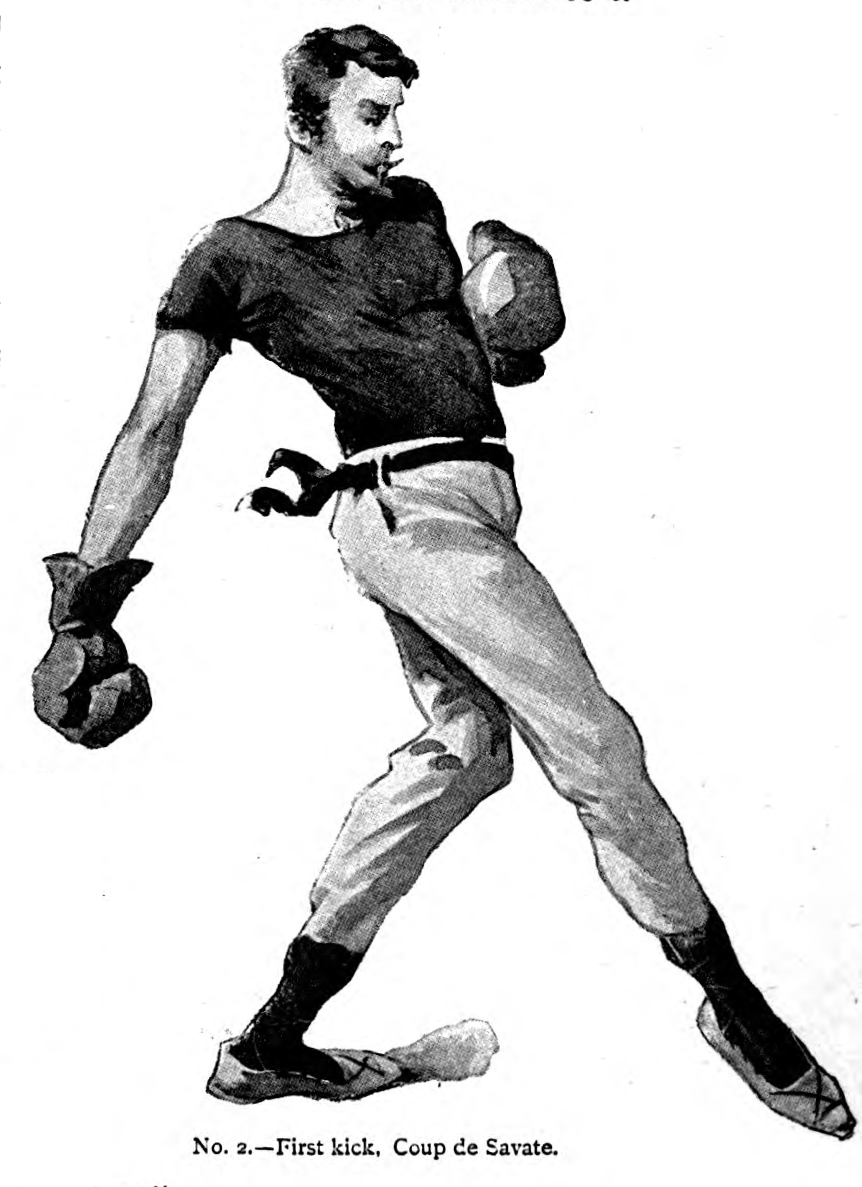
There she explains how Dussardier was wounded in the June 1848 Parisian insurrection, but does so in such compressed fashion with so many ambiguous terms and pronouns 3 that one scholar decided the guilt-ridden Dussardier had killed an unarmed enthusiastic child of The People. A decade later (I eventually learned), the question was settled by Flaubert's work notes and by faster ways to research the coup de savate, safely establishing Dussardier as the hero of a heartwarming anecdote.
Finally, near the end of the novel, in a rare passage of unfiltered direct exposition, Flaubert divulged the oldest and most pertinent information about Dussardier's and Vatnaz's acquaintance. In this origin story, Dussardier noticed her committing a petty act of embezzlement and then destroyed the evidence. What troubles me is why? They didn't become close until long after his cover-up, and no one who Dussardier did care about would've been harmed if Vatnaz was caught. The best I can come up with is HE LOVES BOOSTERS.
So, two awkward paragraphs in 400 pages. Not too shabby, says the fella who can barely scrawl a one-liner without reader mystification.
Why didn't that book achieve the success I had expected? [Charles] Robin 4 may have discovered the reason. It is too truthful, and aesthetically speaking it lacks the falsehood of perspective. Planning so thoroughly made the plan invisible. Every artwork should have a peak, make a pyramid, or at least highlight one point of the sphere. None of that in life, true. But Art is not Nature! No matter! I don't think anyone has taken honesty further. As for the conclusion, I have to admit I still resent all the idiocies it called forth.– Flaubert, letter to Mme Roger des Genettes, October 8, 1879
[...] it affects us as an epic without air, without wings to lift it; reminds us in fact more than anything else of a huge balloon, all of silk pieces strongly sewn together and patiently blown up, but that absolutely refuses to leave the ground.– "Gustave Flaubert" by Henry James (1902)
In Part II, Chapter 4, near the exact center of the book, during an uncomfortable dinner, Frédéric notices something — «Tiens! mais...» ("Wait! but...") — and everyone looks at each other and blushes.
Since Frédéric rarely notices anything at all, my own lack of understanding felt like a deliberate slap in the face, a challenge which could not be honorably refused. After hunting on and off over several days, the vital clew was found in a flirtatious gesture described ten pages earlier. As a bonus, the link between those moments explained a few breezily passed-over events before and after Frédéric's mysterious exclamation. Well played, M. Flaubert!
Turns out he wasn't finished.
When I first read l'Éducation forty-some years ago, its conclusion struck me as audacious, horrifying, hilarious, and entirely appropriate for a novel characterized by audacity, horror, and hilarity.5
When I first re-read l'Éducation, the casual kiss-off was revealed to be a cherry bomb with a four-hundred-page-long fuse, as if Flaubert had expected readers to spend the entire body of the book impatiently waiting for the other savate to drop.
In a way, that's what happened. Over later re-readings, the anticlimax gained anticipatory weight, tugging the body of the novel forward. As I approached the one-chapter-each first-in last-out exits of the two most important people in Frédéric's empty life, it seemed as if that life, as well as this book, were literally folding shut.
Past the failed revolutions and successful repressions, petty betrayals and unpunished murders, hypocrisies rooted too deep to be called dishonest, and here I was again at the first leave-taking, in which a character described
a vivid memory of an undepicted incident
that would've taken place fairly early in the book,
the memory of an adoring gesture
which mirrored the flirtatious gesture
that took place some time later in the book,
which I wouldn't have recalled
except for the puzzle at the center of the book,
a mirroring prepared by Frédéric's déja vu
made of replicated gifts and declarations.
I felt something like a noiseless ringing in my ears, an uplift from ascending webs of cross-breeze and echo, like walking into a Gothic cathedral, but without pinnacles or spires, a pure proliferation of you-should-excuse-the-expression archness with no clear focal points.
And I felt absurdly, indefensibly happy.
The trick by means of which an author at the end closes the circle by referring back to his work's beginnings may underline the limits of a moral education. However, such flourishes should not make us forget the fragility of the verbal house of cards that is Flaubert's novel. Those architectonic qualities for which Flaubert has traditionally been praised presuppose a reader's willingness to participate actively in the construction of a unified whole out of the parts the author furnishes.– "Flaubert and the Difficulty of Reading" by Dennis Porter
This being Flaubert, no uplift admitted unless accompanied by a deflation. And so I'll also admit that an everything-last-is-first-again schema isn't all that conceptually distant from those corny closing flashback-clip montages which deliver a hit of instant nostalgia even when they consist of martial artists kicking each other in the teeth.
And also that the act of close re-reading more than slightly resembles the act of voluble resharing and retelling. I doubt that the few hours of their whorehouse fiasco were truly the best our boyos ever got, but it's a certainty that remembering those few hours has been, twice over, the happiest experience they ever shared. Frédéric and Deslauriers are pathetic losers and it possibly takes one to know two.
Losers love company, though, and I was happy all over again when I found my reactions anticipated and confirmed by a fellow ecstatic:
installing the mechanism of memory well before the memorable event, unnoticed by the character and reader who'll later have the strange sensation of remembering what is currently happening [...] this is a novel in which it is easy to get lost, losing sight of the landmarks – spatial, temporal, psychological, narrative – that usually constitute the signposting of a story. Here, there is no obvious progression, no visible milestones, no signposts: if you have lost the page, too bad for you. But a reality that is all the more powerful, precisely, because this slight sensation of bewilderment and contingency is so similar to the relationships of uncertainty that everyone practices in their trusting but precarious relationships with reality. [...]From thrilling expectations to disappointed aspirations, from apprehensions to small unexpected joys, from sudden bursts of energy to insurmountable weariness, we travel through the story and the violence of History, as we travel through our own existence, sent back in turn from enthusiasm to nostalgia, from illusions to surprises, without seeing the days pass but without reaching any other certainty than that of time that has passed: time lost perhaps, embarrassed by shadows and regrets, missed appointments and false pretenses, beautiful memories too and hopes still alive, in short, a feckless incoherence which memory, paradoxically, transfigures into a full and luminous totality of life.
– "«Qu’est-ce que cela veut dire, la réalité?» Le cryptage du réel dans L’Éducation sentimentale" by Pierre-Marc de Biasi
1. As if to prove the point, Samuel R. Delany's Trouble on Triton reincarnates Frédéric onto Neptune's largest moon, and has a conclusion which will seem "abrupt" to anyone who doesn't recall the final phrase's only prior occurence.
2. He doesn't cite a source, famous or not, for this information.
3. Flaubert pushes pronouns to their breaking point more than once, a prominent example being the third paragraph of "Un cœur simple". I own two English translations and both thoughtfully substitute a proper name for Flaubert's elle.
4. If only for its title, I'll note that in 1877 Dr. Robin published L'instruction et l'éducation, a collection of positivist essays which later fell into the hands of Bouvard et Pécuchet.
5. Which aspect carries most horror varied across re-readings. Most recently it's been the casual disposal of Madame Deslauriers, who's ripe for feminist recovery à la Jean Rhy's Wide Sargasso Sea or Michel Tournier's Friday.
welcome back!
| . . . before . . . | . . . after . . . |
Copyright to contributed work and quoted correspondence remains with the original authors.
Public domain work remains in the public domain.
All other material: Copyright 2026 Ray Davis.